
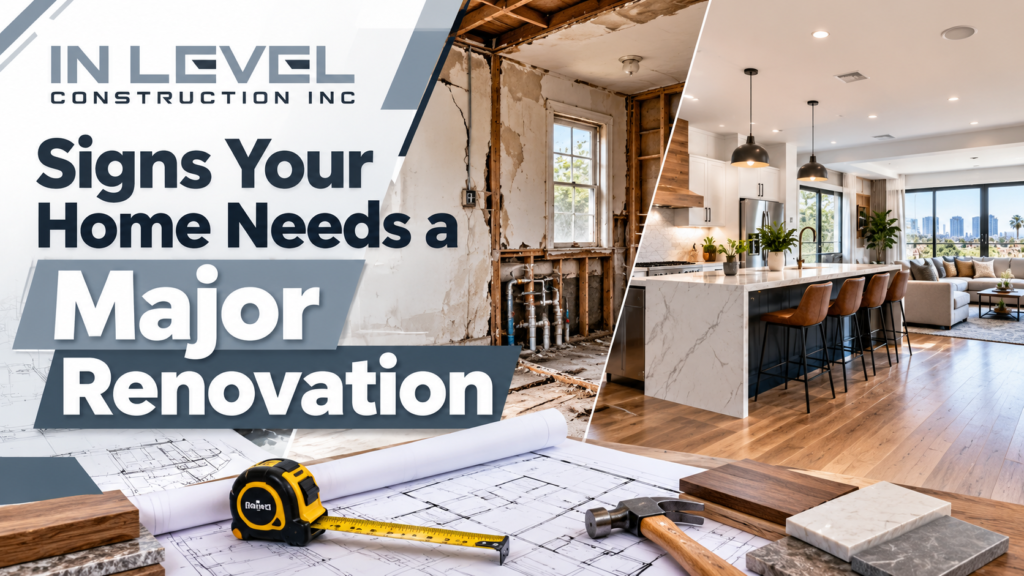
A home does not need to be falling apart before renovation becomes necessary. Some warning signs are structural, while others show up as outdated systems, poor layouts, repeated repairs, or spaces that no longer fit the way you live. Recognizing the signs your home needs a major renovation can help you deal with problems before they become more disruptive. The key is knowing which issues can be handled with small updates and which point to a larger remodeling project. Here are the most common home renovation warning signs and what they may mean.
1. Structural Problems Are Becoming Noticeable
Structural problems in a house are among the clearest signs that major work may be needed. Cracks that keep returning, uneven floors, sagging ceilings, doors that no longer close properly, or visible foundation movement should not be ignored.
Not every crack means there is a serious structural issue, but recurring or worsening problems deserve professional evaluation. If repairs require opening walls, replacing framing, or correcting foundation concerns, it may make sense to coordinate them with a broader renovation.
2. Plumbing or Electrical Systems Are Outdated
Older homes may have plumbing and electrical systems that no longer support modern needs. Frequent breaker trips, too few outlets, recurring leaks, low water pressure, or aging pipes can signal that major systems need attention.
If upgrades require access behind walls or ceilings, a whole home renovation may be more practical than repeated small repairs. Updating these systems during remodeling can also support future kitchen, bathroom, lighting, and technology improvements.
3. The Layout No Longer Works for Your Lifestyle
A house can be structurally sound and still feel difficult to use. Closed-off rooms, poor traffic flow, limited kitchen workspace, insufficient storage, or awkward connections between living areas are common signs your home needs remodeling.
If several rooms need layout changes, a larger renovation may produce better results than treating each room separately. For example, redesigning a kitchen, dining area, and living room together can create a more functional floor plan.
This is one of the strongest reasons to renovate your home when your household needs have changed.
4. Repairs Are Becoming Too Frequent
Repeated repairs can indicate that individual fixes are no longer solving the underlying problem. Regular issues with leaking fixtures, damaged flooring, worn cabinetry, failing finishes, or moisture can become expensive and frustrating.
A home remodeling checklist can help reveal patterns. Note what has been repaired, what still needs attention, and which problems are connected.
When several major components need work at the same time, a coordinated renovation may be easier to manage than ongoing patchwork.
5. Your Home Feels Outdated and Less Functional
Some old house renovation signs are less urgent but still meaningful. Poor kitchen storage, dated bathrooms, worn flooring, old lighting, or finishes that no longer suit the home can make daily living less comfortable.
The issue is not only appearance. Signs your home is outdated can also include limited electrical access, weak task lighting, inefficient layouts, and storage that no longer works for your needs.
An outdated home renovation can address both appearance and function so the space feels current without sacrificing practicality.
6. Comfort Problems Affect Multiple Rooms
Rooms that are consistently too hot or cold, noticeable drafts, aging windows, poor insulation, or an HVAC system that struggles can point to broader home improvement needs.
Before cosmetic work begins, find out whether the problem comes from insulation, air sealing, windows, ductwork, equipment, or another source. A larger renovation can make it easier to coordinate these improvements.
7. There Is Significant Moisture or Water Damage
Persistent stains, musty odors, peeling finishes, damaged drywall, or repeated leaks are serious home renovation warning signs. Moisture problems should be investigated before remodeling because new materials can quickly be damaged if the source remains.
The cause may involve roofing, plumbing, drainage, ventilation, waterproofing, or another building system. Depending on the extent, repairs may require removing walls, flooring, cabinetry, or ceilings.
If several areas are affected, a major renovation may be the most practical way to restore the home properly.
8. Several Major Rooms Need Work at the Same Time
If the kitchen, bathrooms, flooring, lighting, storage, and common areas all need attention, separate projects over several years can create repeated disruption and inconsistent results.
A whole home renovation allows layouts, systems, finishes, and materials to be planned together. This can improve visual continuity and reduce the chance that one project interferes with another.
Home Renovation vs Remodeling: What Is the Difference?
The terms are often used interchangeably, but they can describe different levels of work.
Renovation usually focuses on restoring or updating an existing space, such as replacing finishes, flooring, cabinets, or fixtures. Remodeling more often changes the form or function of a space, such as removing walls, altering layouts, relocating plumbing, or expanding rooms.
A major project can include both. The right approach depends on the home’s condition, budget, scope, and how many rooms or systems need to change.
When Should You Remodel Your House?
Consider a major remodel when several problems are connected, important systems need replacement, the layout limits everyday use, or repeated repairs no longer make sense.
Before deciding, create a home remodeling checklist that covers:
- Structural or safety concerns
- Plumbing and electrical needs
- Water or moisture damage
- Kitchen and bathroom condition
- Flooring, walls, and ceilings
- Storage and layout problems
- Heating, cooling, and comfort issues
- Future household needs
Conclusion
The clearest signs your home needs a major renovation usually involve function, condition, and recurring problems rather than appearance alone. Structural concerns, outdated systems, moisture damage, inefficient layouts, and multiple rooms needing work can all point toward a larger project. Before choosing finishes or house remodeling ideas, identify the underlying problems and prioritize essential repairs. A careful review of your home renovation needs can help you decide whether targeted updates or a whole home renovation is the more practical path.
FAQ's
Look for recurring repairs, structural concerns, outdated systems, water damage, poor layouts, worn finishes, and several rooms that need improvement. If multiple issues overlap, a major renovation may be more practical than individual projects.
It depends on the home's condition, renovation scope, budget, location, and long-term plans. Renovating may make sense if the property suits your needs and can support the changes you want. Moving may be worth considering if major limitations cannot be solved reasonably.
Address structural issues, leaks, moisture, roofing, electrical, plumbing, and other building systems before cosmetic work. Finishes should generally come after the home is safe, dry, and mechanically sound.
Potential benefits include better functionality, updated systems, improved comfort, more useful storage, refreshed finishes, and a layout that better supports your household. The exact benefits depend on the home's condition and project scope.

 ICONIER Digital Agency